

The Paris-Est station bunker
Hidden beneath this Paris railway station lies a little-known secret: an airtight shelter built in April 1939, just before the outbreak of World War II. Step inside to uncover the long-forgotten history of this underground refuge.
When you connected to the site, you refused the deposit of all cookies. To watch this video, you need to change your preferences by clicking on:
A hidden refuge, untouched since WWII
An airtight shelter in a nation scarred by poison gas warfare
Beneath the tracks of Paris-Est station, behind a locked trapdoor, lies a forgotten piece of history. A narrow stairwell leads to a sealed door that opens into a small chamber with another door on the opposite end. This airlock-style decontamination zone is the first clue: the 110-square-meter shelter was designed to withstand poison gas attacks like those that haunted France after World War I.
11
rooms, including 2 command centres and 4 rooms for managing rail traffic

50
people could survive for 10 hours thanks to a manually powered air filtration system
70
rail traffic controllers could take shelter here in the event of an attack
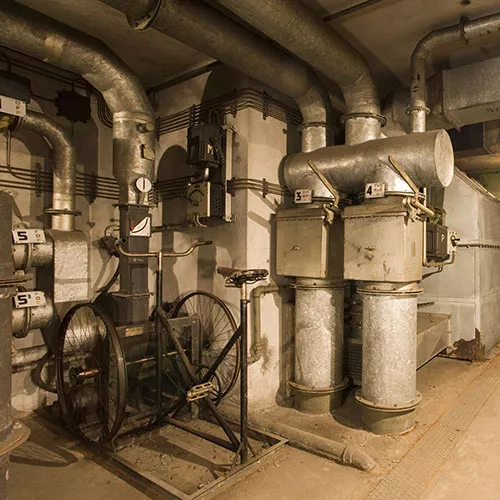
Human-powered ventilation!
The shelter was designed to house 70 controllers and ensure continued rail operations in eastern France in the event of an attack. An ingenious bicycle-driven system powered the air filter, protecting those inside from toxic gases. Just a few pedal turns were enough to activate the fan.
The bunker remains intact because it was completely forgotten
Rail historian

Exceptionally well preserved
The shelter was built for military personnel and railway workers assigned to command during the war. Under the German Occupation, railways came under the control of military transport authorities in occupied France. German-language signs inside the shelter suggest it may have been prepared for use by occupying forces, but its pristine condition and absence of wear suggest it was never activated. Similar bunkers at the Paris-Lyon, Paris-Nord and Paris-Saint Lazare stations were dismantled after the war, which makes this shelter a rare relic of WWII infrastructure and a valuable piece of wartime heritage. In 2019, some 200 visitors had the rare chance to explore the site during European Heritage Days.
Share the article