

Keolis commits to fight against climate change
Alongside the Transportation Authorities and its partners, Keolis is fighting against climate change through ambitious and concrete actions. Find out more about our environmental policy.
Our environmental commitments
Our targets approved
Our greenhouse gas reduction targets are in line with the 2015 Paris Agreements. They aim to limit global warming to 1.5°C above pre-industrial levels by the end of the century. The Science Based Targets initiative (SBTi)1 has confirmed that Keolis' contribution to the fight against climate change is consistent with its climate transition plan.
Our concrete actions
- Encouraging the transition of our vehicles to non-fossil fuel energy sources.
- Involving stakeholders, suppliers and subcontractors and inspiring them to embrace better practices and climate commitments.
- Raising awareness about climate issues among teams and implementing a climate criterion in the variable pay of the Group’s executives.
- Ensuring our objectives align with our existing commitments, notably the ESG indicators.
By 2030
-42%
emissions related to energy consumption

By 2028
43%
of purchased emissions sourced from SBTi1-engaged suppliers
By 2030
-25%
emissions from energy upstream, waste management and commuting, déchets et trajets domicile-travail
Supporting environmental performance
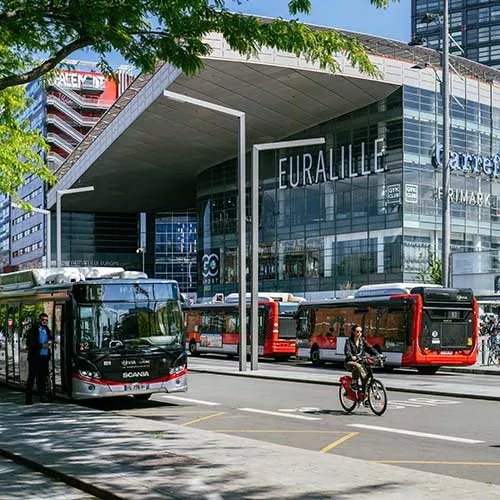
Keolis’ public service mission fits naturally into the UN Sustainable Development Goal 112: by reducing the role of personal cars, the Group works to promote sustainable cities and communities.
The three key undertakings of our environmental policy:
- Contributing to climate change mitigation through our practices and promoting sustainable mobility.
- Protecting the environment by controlling our activities and preventing pollution.
- Continuously improving our environmental approach.
Acting for the ecological transition
How we plan to reduce our carbon footprint
- Improving waste recovery with sorting, recovery or elimination guidelines tailored to the local context. In 2023, 83% of hazardous waste was recovered, a 10-point increase over two years.
- Controlling energy and water consumption via systems for recycling vehicle washing water and/or rainwater recovery systems. Through these efforts, water consumption dropped by 9% between 2022 and 2023.
With regard to energy consumption, each Keolis subsidiary has drawn up its own energy efficiency plan. - Supporting the local economy via our policy of sustainable and local purchasing. In 2021 the Group launched an initiative to encourage its suppliers to take part in reforestation projects.
Promoting solar energy
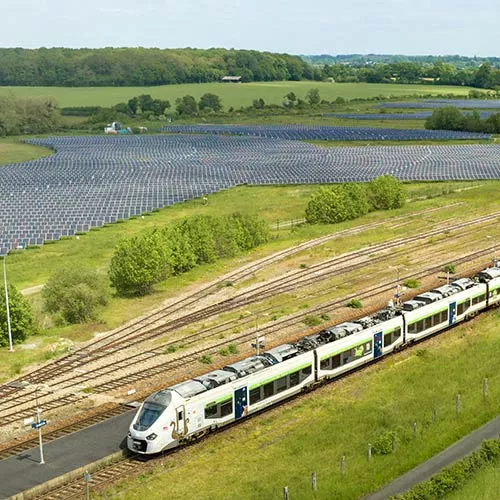
From 1 January 2025, the Group will benefit from a secure supply of renewable electricity for its operations thanks to a power purchase agreement signed with power specialist Urbansolar. Generated in solar farms in France, this green electricity will avoid 290 tonnes of CO2 emissions every year for 15 years, the equivalent of driving 3.4 million kilometres.
Implementing a global approach
60% of Keolis' turnover is covered by ISO 14001 certification, the most widely recognised environmental management system in the world. This certification testifies to the global approach and commitment of all its employees to reducing the environmental impact of activities. The goal for 2030 is to have 80% of the Group’s turnover covered by ISO 14001 certification.
Encouraging sustainable mobility
Working with local authorities
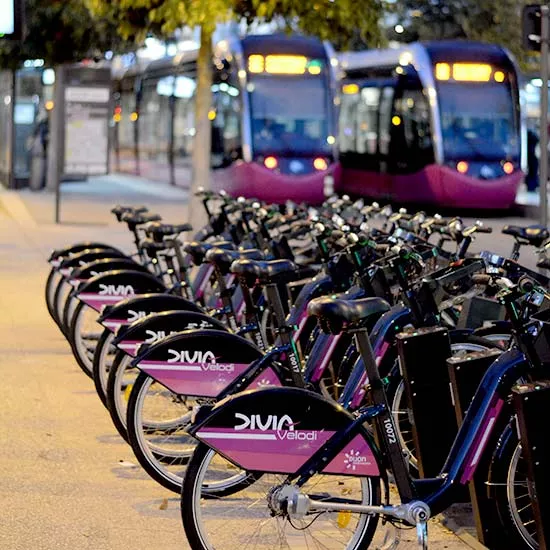
The Group assists public transport authorities in improving the environmental performance of their transport networks. It encourages multimodality, shared mobility and active mobility (carpooling, cycling, etc.). Consulting with the communities concerned, the Group constantly seeks the most appropriate local mobility solutions to meet their local environmental, social and economic challenges.
Developing hydrogen vehicles
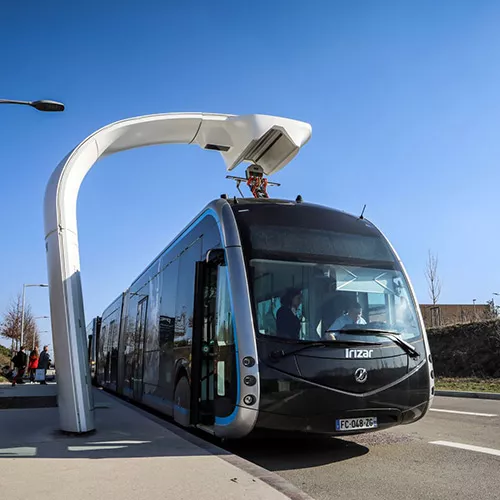
Keolis supports the development of hydrogen-powered vehicles in France and the United States. Since September 2024, it has operated and maintained 14 new and retrofitted hydrogen-powered buses on two main lines of the Clermont-Ferrand Métropole public transport network. In the United States, 33 hydrogen-powered New Flyer buses are already operating in Southern California.