

Angoulême—the first station with a solar-panelled train-shed roof in France
After a complete restoration, Angoulême’s monumental train shed — the huge, vaulted space that shelters tracks, platforms and waiting passengers — now has a roof fully fitted with photovoltaic panels. It was inaugurated on 28 May 2026, and the rooftop panels will cover 40% of the station’s energy needs.
Heritage meets sustainable development
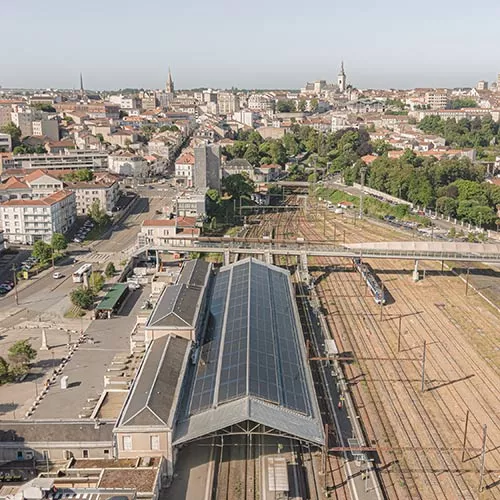
After many months of work, restoration of the 1886 Grande Halle Voyageurs at Angoulême station is now complete. It’s the first historic station train shed in France to be fitted with a roof incorporating solar panels that’s designed to cover 40% of its energy needs. The renovation of this 19th-century structure—carried out in conjunction with France’s national heritage architects, the Architectes des Bâtiments de France—shows that heritage preservation and renewable energy production can go hand in hand.
When you connected to the site, you refused the deposit of all cookies. To watch this video, you need to change your preferences by clicking on:
840 rooftop solar panels are being installed at Angoulême station
17 months of works
Designed by architects at SNCF Gares & Connexions and its subsidiary AREP, a specialist in transport infrastructure, the restoration and conversion project included:
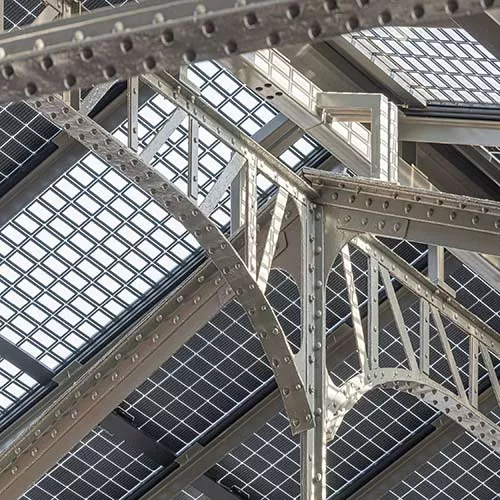
- reinforcing, stripping and repainting the original metal structure
- removing and rebuilding the station’s rooflights1
- installing glass solar panels
- restoring access points for maintenance, lighting and public-address systems
3,085 sq m
total surface area of the Grande Halle Voyageurs
40%
of the station’s electricity needs met

€17.4 m
budget, fully funded by SNCF Gares & Connexions
Standout features of the restored Grande Halle Voyageurs
- solar roof panels now cover 40% of the station’s electricity requirements
- the photovoltaic shade canopy fitted on the rooflights replaced a conventional glass roof, reducing material use by 16 tonnes
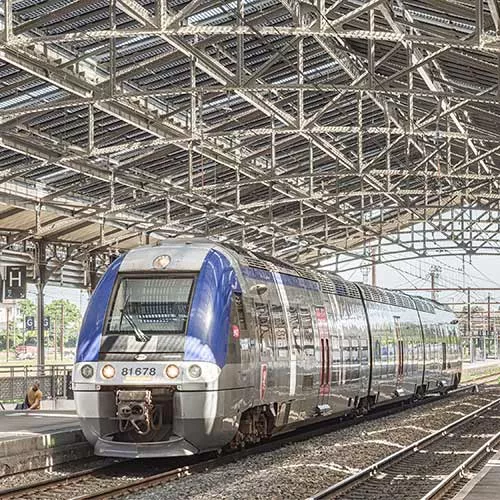
- heritage structure enhanced and preserved by harmonious integration of solar shading, which maintains the roof’s original frame while revealing the structure through filtered light
- lower carbon emissions thanks to low-carbon solar panels assembled in Alsace
- improved passenger comfort, with greater protection from the elements, natural light and temperature regulation in summer (reduced by 2-4° C)