

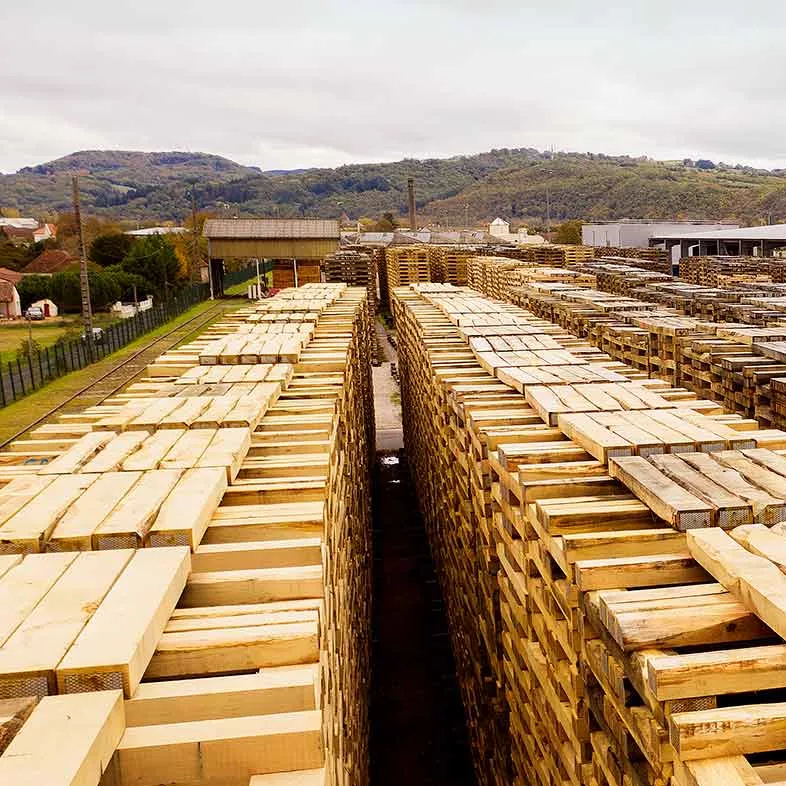
How SNCF Réseau produces eco-friendly wooden sleepers
Our teams apply oil-borne CuN (copper naphthenate) to wooden railway ties produced at the Bretenoux-Biars site in SW France to prevent decay. It’s a more sustainable alternative to creosote.
Replacing creosote by 2029
Since September 2025, wooden sleepers produced at the SNCF Réseau plant in Bretenoux-Biars, in SW France, have been treated with copper naphthenate oil rather than traditional creosote. Both products protect wood and fight decay, but creosote is deemed harmful to the environment.
In 2011, the European Union launched a programme to restrict its use, committing infrastructure managers to develop and adopt an effective alternative by 2029 at the latest.
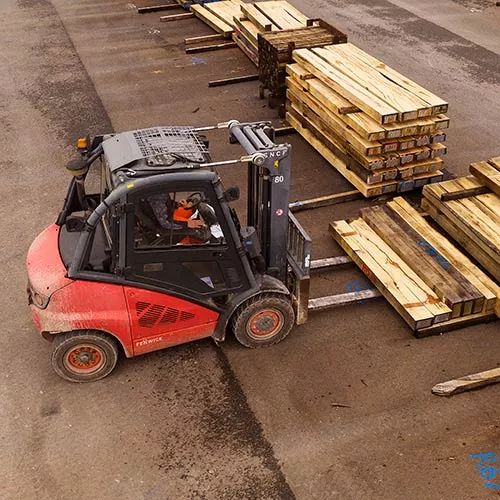
Oil-based copper naphthenate—a more eco-friendly solution
In 2013, SNCF Réseau began searching for a sustainable alternative to creosote. After extensive laboratory and field testing, it selected oil-based copper naphthenate (CuN). This preservative extends the service life of wooden sleepers for up to 35 years, matching the performance of creosote while offering significant environmental advantages during production:
- Lower energy use: the treatment temperature is reduced by half (from 120° C to 60° C), cutting energy consumption by a factor of 4.
- Water savings: around 3,000 cubic meters of boiler water saved each year.

€6.5M
invested to upgrade the Bretenoux-Biars plant, including €2m financed by ADEME

35 years
average service life of wooden sleepers treated with CuN oil

300,000
wood components produced each year at our Bretenoux-Biars plant in the Lot
What are wooden sleepers used for?
Railway sleepers, also known as ties, are the rectangular supports that hold the rails in place and maintain the correct gauge—the distance between the rails. These critical components of the rail network are made of either wood or concrete.
The wooden sleepers used by SNCF Réseau are produced in France from sustainably grown oak. They are environmentally friendly, as they store CO2 throughout their useful life. From a technical standpoint, wooden ties are also more adaptable and easier to install than those made from other materials.
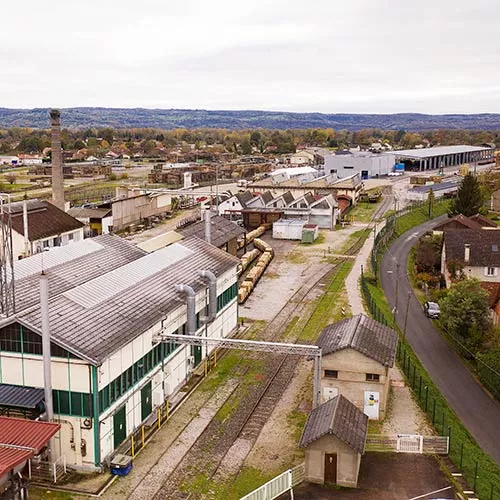
The Bretenoux–Biars plant—Europe’s largest
SNCF Réseau chose to continue using wooden sleepers—a sustainable, natural and renewable resource—when it invested in the new Bretenoux-Biars plant. This is now Europe’s largest copper-oil wood treatment facility, covering 26 hectares and employing nearly 100 people.
Each year, the plant produces over 300,000 wooden components for standard tracks, switches and engineering structures such as bridges. It plays a vital role in the management and supply of SNCF Réseau construction sites across the network.
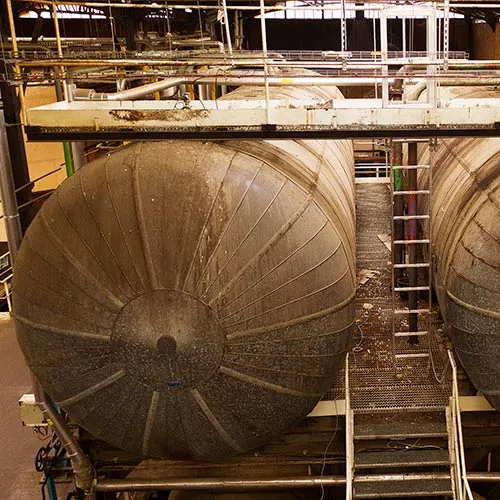
Pressure treating wooden sleepers
- Drying: on delivery, sleeper blanks are stacked in cross-piles on site to allow the wood to dry before treatment—a process that takes several months.
- Preparation: once dry, the blanks are cut, notched and drilled, then transported to the treatment plant and loaded into a special cylinder.
- Impregnation: the cylinder is filled with a copper naphthenate oil solution and pressurized so that the preservative oil penetrates deep into the wood. Several air extraction phases ensure thorough impregnation.
- Finishing: at the end of this four-hour cycle, excess oil is recovered and the sleepers are vacuum-treated and tilted to remove any remaining surplus.
Building the circular economy
When copper-treated sleepers reach the end of their service life, they are repurposed to reinforce embankments or reused in greenway landscaping—a tangible example of the circular economy at work.
Each year, about 2 million tonnes of materials and components are recovered from the railway infrastructure, a wealth of material ready for recycling or reuse.
Among other initiatives, SNCF operates a rail recycling centre in the Côte-d’Or department, designed and built as part of the Group’s drive toward zero waste. In the near future, SNCF Réseau will recover 100% of all structural materials used for tracks, giving them a second life and reducing related CO2 emissions by 25% over the 2020s.
Share the article