


Innovation: CORIFER’s 7-year roadmap
The Steering Committee for Railway Research and Innovation—CORIFER—is a vital link between the French State and the rail industry. This new entity is focused on accelerating the innovation cycle and making rail THE solution for tomorrow’s high-performance, decarbonized mass transport system.
1 roadmap, 4 priorities
CORIFER was launched on 14 November 2022, at the first meeting of the Ministerial Steering Committee for Transport under the France 2030 national investment plan. It has adopted the rail industry’s R&D roadmap for 2023-2030, built around 4 priorities—industry and infrastructure of the future, inclusive mobility, zero-carbon trains and smart trains. CORIFER will focus on enhancing the rail sector's assets by uniting its industrial players around core innovations.

Structuring, accelerating and transforming the industry
CORIFER Chair Carole Desnost, who also sits on SNCF’s Executive Committee member and serves as our Chief Technical Officer for Technology, Innovation and Group Projects, explains how this new entity will structure the industry. Aim: accelerate its transformation, improve service quality and make it more competitive—all with an eye toward accelerating the modal shift to rail.
What is CORIFER’s mission?
Carole Desnost: CORIFER sends a clear message from the French State. It says, “We know that we need rail”, and it asks the industry, “How do you see rail evolving? Where do you want to go, and how do you plan to get there?”
In short, CORIFER is a bridge between the French State and the rail industry. It’s a place where we can pool all our innovative ideas, join our efforts, and identify projects that will let us develop reliable, decarbonized mobility. Mobility that’s more inclusive, serves everyone and meets the State’s expectations. Industry players had already begun working together under the Investments for the Future Programme (PIA4).1 Today our aim is to accelerate the innovation cycle, reducing the time from prototype to scale-up. We want to develop energy-efficient, resilient, sovereign mass mobility, with affordable fares in both cities and rural communities.
How is CORIFER structured?
CD: The rail industry has a wide range of stakeholders—rail operators, infrastructure managers, local communities, public-private research centres, competitiveness clusters and more. CORIFER brings them together around calls for expression of interest2 (CEI). We want to build an industry that has more capacity, is more digitalized, and offers more trains with better connections to other forms of mobility.
To achieve that, we’ve set 4 priorities for our 2023-2030 roadmap:
- Infrastructure and industry of the future: support the development of new rail systems through strong French industries and high-performance, eco-friendly technologies
- Inclusive mobility: make rail the number one choice for passengers in every part of France, with more flexibility, more accessibility and more connectivity
- Zero-carbon trains: make rail the heart of a multimodal mobility system that is sustainable, decarbonized, resilient and energy-efficient
- Smart trains: step up development and deployment of onboard digital systems to make transport more efficient for both passengers and freight.
What do you want this roadmap to achieve?
CD: We want to accelerate digital and industrial transformation of the sector so that our existing infrastructure can handle more trains. That’s one of the things we want to accomplish under France 2030. The rail network is a powerful asset, and if we leverage new technologies such as digital signalling (ERTMS), driverless trains and new traffic management centres, we can run more trains on it.
But boosting capacity can’t be our only aim. We’re also designing innovative solutions for every part of France. For rural communities, we’re developing light trains. For cities, we want to double traffic volume. And for major urban areas, we’re developing the Metropolitan and Regional Express Service—a transport network that meet the needs of city-dwellers. All of this calls for industrial change, and we need to support that to achieve the decarbonized mobility that everyone wants. But resources are limited, and if we want to move fast, we need to work together.
Are you coordinating efforts at the European level?
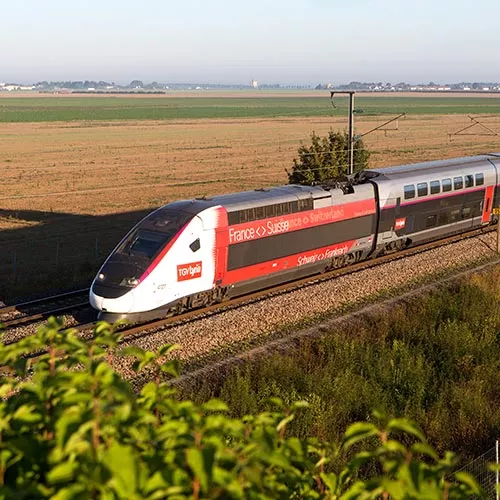
CD: There’s already an organization for European rail research—a sort of “super CORIFER” called Europe’s Rail. It builds on the Shift2Rail3 programme, and aims to move rail research forward and accelerate rollout of innovative technologies and new solutions for operations. One example is the work around digitalized trains, which we’ll continue this year. That project is expected to deliver European-level results that will accelerate the process of automating the rail industry. French rail expertise is well-established, and we’re playing an active role in the ERJU (Europe's Rail Joint Undertaking).
What is our Group’s role in the effort?
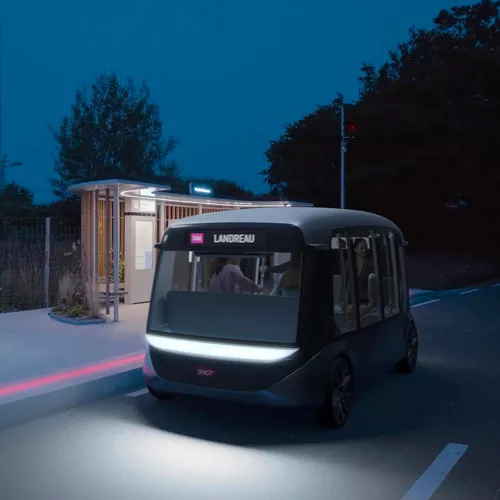
CD: Think of us as an orchestra conductor. We’re leading an expert industry, much as we did for 2 years during the PIA4 investment programme. Thanks to our knowledge of the network, rolling stock and customers, and our focus on local needs, we can look ahead; it’s easier for us to identify which projects should take priority. The aim is always to accelerate the innovation cycle. In the past few years we’ve set up 2 innovation labs: Tech4Rail, for the rail system proper, and Tech4Mobility for anything related to emerging mobilities. Now more than ever, rail needs innovation. If we work with the sector as a whole to set clear priorities, it will be easier to get the industrial players on board. They can’t see the market clearly if they don’t have a long-term view.
A look back at CORIFER’S 2023 CEI
CORIFER’s spring 2023 call for expressions of interest (CEI) cemented the top 4 priorities of the rail industry’s new R&D roadmap:
- developing trains with minimal environmental impact
- delivering inclusive, high-performance commuter mobility
- digitalizing the rail transport system—vehicles, infrastructure and industry
- stepping up the pace of rail freight
Through the various rounds of the CORIFER CEI, SNCF Group and its industrial and academic partners submitted 22 applications.
Accelerating innovation with France 2030
The France 2030 plan integrates the State’s Investments for the Future Programmes (PIA). Aim: use technological and industrial innovation to transform key economic sectors for the long term. France 2030 funding for all sectors totals €54 million, and the plan covers 25%-50% of project costs. CORIFER is the conduit for projects in the rail industry.