

“Gender equality involves addressing practical, real-world issues in our everyday operations”
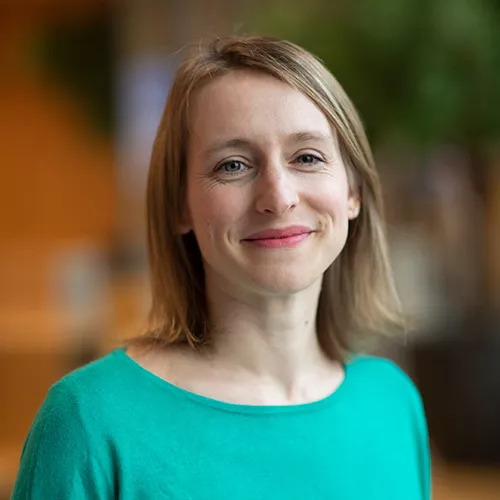
Can a gender equality network really make an impact in a group as big as SNCF? How do you make change happen? Do men have a role to play? In March 2024, we put these questions and more to Anne-Sophie Nomblot, then Chair of SNCF Mixité.
Since its launch in 2012, SNCF Mixité—our employee network dedicated to gender equality—has become a cornerstone in the fight against gender-based discrimination and stereotypes. And with 12,0001 members, it is now the largest network of its kind in France. To gain insights into its work, we spoke, back in 2024, with Chair Anne-Sophie Nomblot, who detailed concrete steps being taken to foster diversity and gender equality at SNCF.
Why did you join the network?
Like many, it was out of curiosity. I had a light-bulb moment when my children were born and I started to question things more: What values did I want to pass on? How could I learn more about issues like environmental protection and workplace equality?
Did joining the network help you find answers?
Yes, it did. I took part in personal development workshops and joined its mentoring programme. All that covered a host of issues: ambition, work-life balance, workplace relations, combatting sexism, and more. The network operates like a virtuous circle.
How so?
After discussing all these topics at SNCF Mixité, I realised I wanted to dig deeper. So I read a lot and listened to podcasts and became increasingly engaged; I became more aware of certain issues and really wanted to get involved. With support from an intrapreneurship1 programme set up by SNCF Mixité, I set up La Boutique Éco2 with 2 colleagues to promote the circular economy at SNCF. That experience boosted my confidence in myself and my abilities. I felt I had received a lot from the network...
So you wanted to give back?
Yes, by becoming a network ambassador. Which I did until Francesca Aceto3 suggested that I become Chair.
How has the network evolved?
Initially, networks like these aimed to help women realise they were holding themselves back professionally. So, the focus was on coaching, mentoring sessions and personal development workshops. The programme was mostly for people in managerial positions. And it’s true that 1 in 2 women managers belong to our network.
What about non-managerial staff?
They make up a third of our numbers—a figure we should aim to increase. Public debate often centres on getting more women onto boards and executive committees, but it shouldn’t stop there. To achieve workplace and gender equality, we need to go beyond women managers to address practical, real-world issues that affect women in our day-to-day operations.
Such as?
For instance, some SNCF properties still don’t have toilets or changing rooms for women. We’ve launched an initiative based on the “Tous SNCF4” model that encourages our units to assess their own gender equality performance, compare their respective results and develop local action plans to tackle practical, real-life problems.
Can you give some concrete examples?
One example I particularly like concerns the high-viz outfits worn by staff trackside and in technicentres. They weren’t designed for women! So, a group of SNCF Mixité members teamed up with a supplier to create designs for our body shapes. A completely different example is the drama workshops held for trainees on work-study programmes.
What role can men play within the network?
These days, we can’t limit talk about harassment in the workplace to women alone. Most managers are still men—they hire, train, and promote employees. Which means they’re the ones who set the tone, who accept or reject sexist behaviour on their teams. At the moment, only 22%6 of our members are men, and we need more. They’re the trail blazers, the good Samaritans! And we need to view issues of gender equality from both perspectives, including theirs.
What do you mean by that?
Well, we’ve organised parenting workshops, focusing in particular on the role of fathers. Personally, I’m convinced that involving fathers as soon as the child is born is crucial—and the first step there is longer paternity leave—since it encourages more equitable sharing of parenting responsibilities within couples.
What other “male” issues do you address?
We tackle toxic masculinity—meaning the pressure to conform to harmful behaviour associated with traditional masculinity—and its impact on safety in our work environment. Years ago, when I worked at a switching station, I was offered alcohol. I refused and because I was a woman, my colleagues didn’t insist. However, young men who were also newcomers like me often faced stronger peer pressure. Since then, the company has made significant strides in preventing alcohol use, but we still have to guard against pressure to “fit in and man up.” Some people aren’t comfortable in that kind of macho atmosphere.
Are there gender equality issues specific to SNCF?
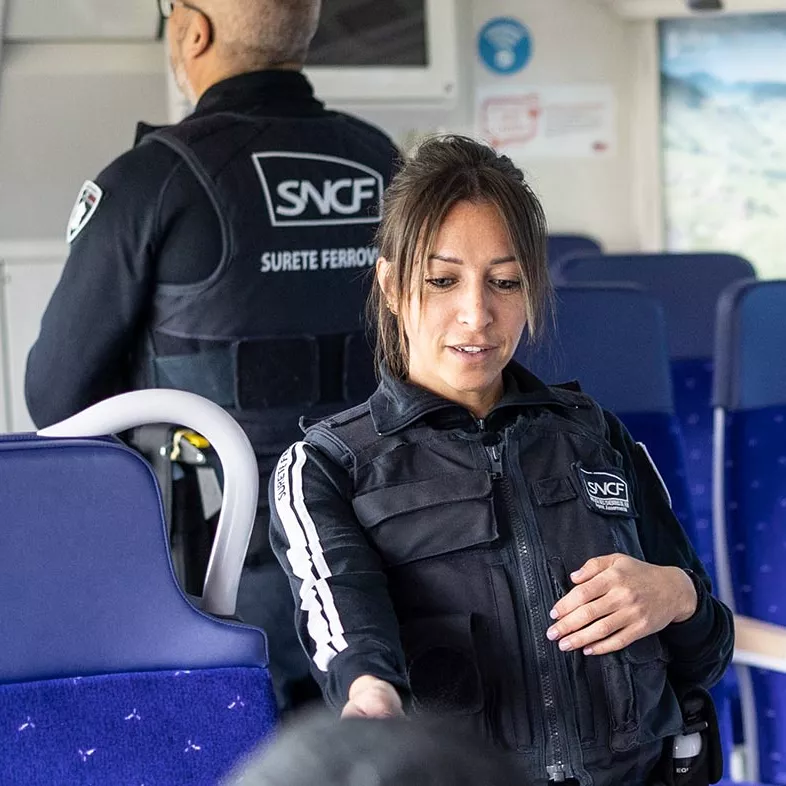
SNCF carries the weight of its industrial heritage, like the auto industry, which has a comparable percentage of women employees. But there are plenty of jobs within the Group that don’t require technical qualifications. While it’s true that few women graduate with technical diplomas nowadays, they can apply for positions like train driver or railway security officer5.
Only 12% of professions in France are truly gender balanced. There’s still a significant divide, with outdoor jobs typically reserved for men and indoor jobs often automatically assigned to women.
And yet gender stereotypes endure, right?
Yes, only 12% of professions in France are truly gender balanced. There’s still a significant divide, with outdoor jobs typically reserved for men and indoor jobs often automatically assigned to women. That said, a woman can easily become a train driver at SNCF. There are no physical requirements that prevent women from doing that job. The only potential drawback might be the working hours—although that’s typically more of an issue for mothers.
How do you address these issues?
During the lockdowns, we set up a lab team8 called “New ways of working” to explore how the health crisis disrupted work-life balance. That exceptional situation sparked a reflection within SNCF Mixité on the impact of parenting, physical presence in the workplace, work organization and more.
How do the delegations function?
They’re organized by region or by profession and are made up of particularly engaged network members. Each one is free to organize its own events and encourage gatherings on the ground. Some share best practices with networks outside the company, while others focus on organizing in-house sports events, workshops and conferences, for example.
Do they give talks in schools?
Yes, delegates—for example from Rolling Stock—go into schools to talk about their professions and spark vocations. The Rolling Stock unit has the lowest share of women employees and receives the fewest job applications from women. So its goal is to combat gender stereotypes in girls’ career guidance as early in the education system as possible.