

TGV travel, 45 years on: A look back at milestones on the journey
France’s TGV made its first commercial journey on 27 September 1981, carrying passengers between Paris and Lyon. Since then, those three letters have become part of everyday French language and life. From holidays to daily commutes and long-distance travel, the TGV has come to embody fast, comfortable travel, and pioneering technology. It is now an integral part of our shared heritage.
1981
TGV made its first commercial journey on 27 September

3 billion
passengers have travelled on TGVs over the past 45 years

168 million
people travelled by high-speed rail in 2025 alone
Revolutionizing travel
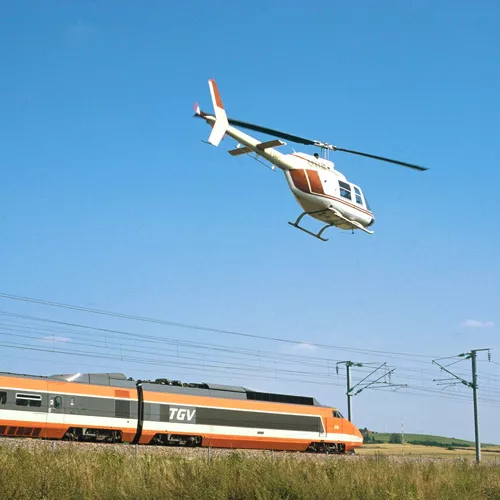
TGV service has radically transformed life in France. By slashing travel time between major cities—from Lille and Strasbourg to Rennes, Bordeaux and Marseille—it has helped drive economic growth, attracting businesses and tourists and giving an unprecedented boost to regional development.
Beyond France’s borders
In the decades that followed, TGV service expanded beyond France. Eurostar brought high-speed rail connections to the UK, then Belgium the Netherlands and Germany. TGV Lyria linked France and Switzerland, while TGV INOUI services developed high-speed links between France and Spain, Italy, and more recently Germany (thanks to a partnership with Deutsche Bahn). Since the launch of OUIGO España in 2021, SNCF has also exported its high-speed expertise directly to the Spanish market.
Going electric
The 1973 oil shock prompted a rethink of TGV’s propulsion system, which was still at the design stage. A strategic decision followed: the new train would run on electrified lines. Today, that choice helps make high-speed rail one of the world’s most eco-friendly forms of mass transport, well ahead of private cars and planes. In 2013, the launch of OUIGO, the low-cost TGV service, brought a new generation of passengers to high-speed rail.
TGV orange
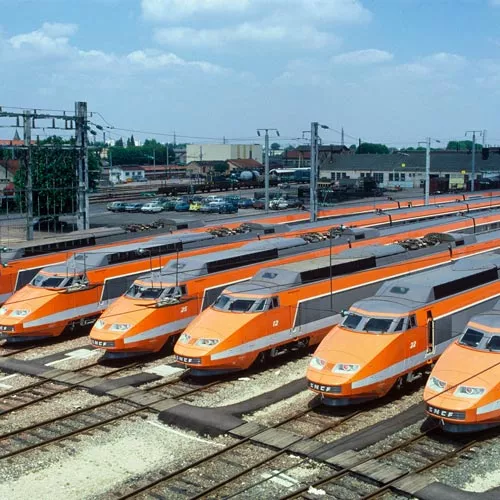
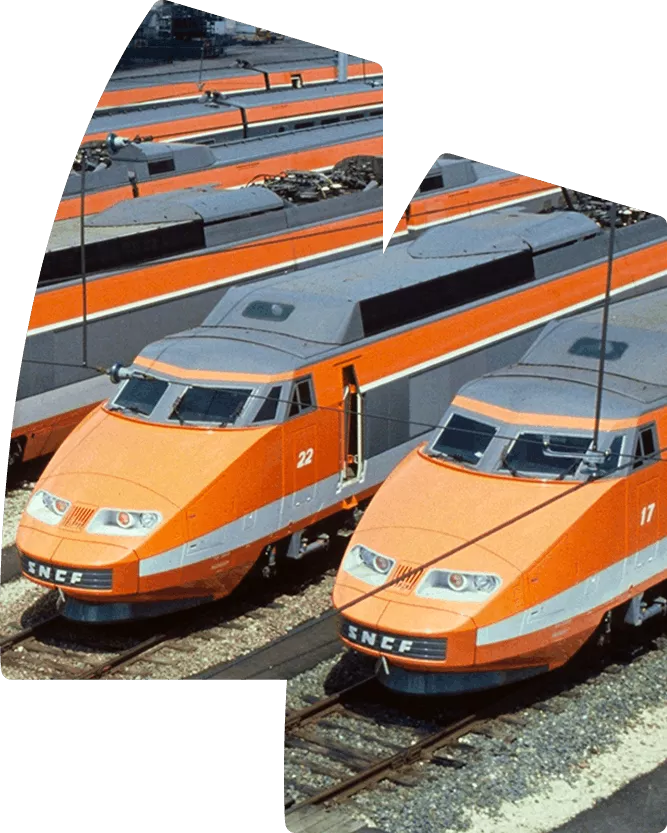
In France’s collective imagination, the TGV has long been synonymous with bright orange. That distinctive colour was part of the livery created for the radically new train, with its tapered nose and streamlined silhouette, designed by Jacques Cooper, often described as the father of the TGV. Orange later gave way to metallic grey and blue, followed by “carmillon”, a shade blending carmine and vermilion.
Interiors designed for comfort and social interactions
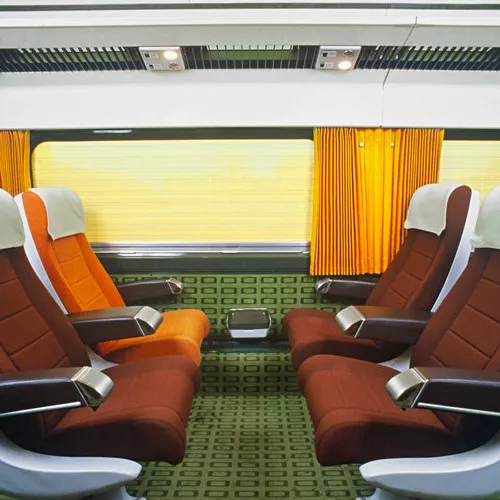
The seats, lighting and signage inside the TGV Atlantique were designed by Roger Tallon, one of France’s leading industrial designers. He had already worked on SNCF’s Corail coaches and would later go on to design interiors for the Eurostar and the TGV Duplex models. The café-bar coaches were conceived as rolling lounges where passengers could enjoy refreshments and socialize. Railway lore has it that engineers spent hours testing the stability of a cup of coffee at 270 kmph.
The TGV serves as a strong reminder that innovation only makes sense if it benefits passengers, local communities, and the planet.
CEO and Head of TER at SNCF Voyageurs
km/h
This is the world speed record held by the TGV since 2007.
A complex ecosystem
The TGV is far more than a train travelling at 300 km/h. Keeping this flagship of French rail moving depends on:
- specialized infrastructure—dedicated high-speed lines built for TGV traffic since 1981, including a new wave of routes opened from 2017 onwards: LGV Sud Europe Atlantique, and Bretagne-Pays de la Loire
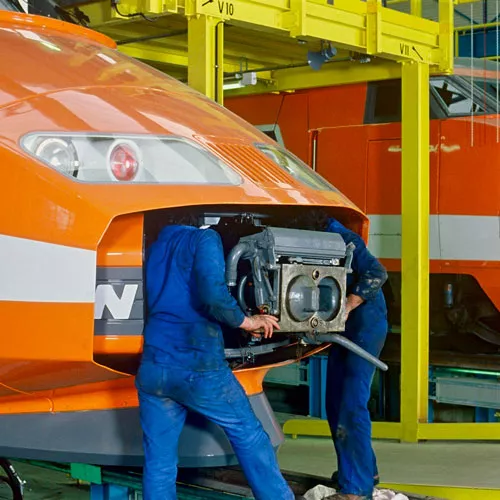
- human expertise—including a completely new approach to maintenance at SNCF technical centres, with teams trained to keep rolling stock in optimum working order, supported by new roles, processes and tools.
New technologies using sensors and data analysis are also enabling predictive maintenance, helping teams anticipate issues before they lead to breakdowns and keep trains in service longer. SNCF’s O2D programme, designed to extend the useful life of rolling stock and reduce premature obsolescence, can add up to 10 years to a train’s operational lifespan.
Celebrating human—and collective—achievements
Above all, the story of French high-speed rail is the story of people: drivers, train managers, station staff, maintenance teams, engineers, industrial designers, and production and safety staff. Railway professionals from many different fields, united by the same exacting standards: pride in a job well done, an uncompromising approach to safety, and a commitment to put passengers first at all times.
TGV milestones
Share the article